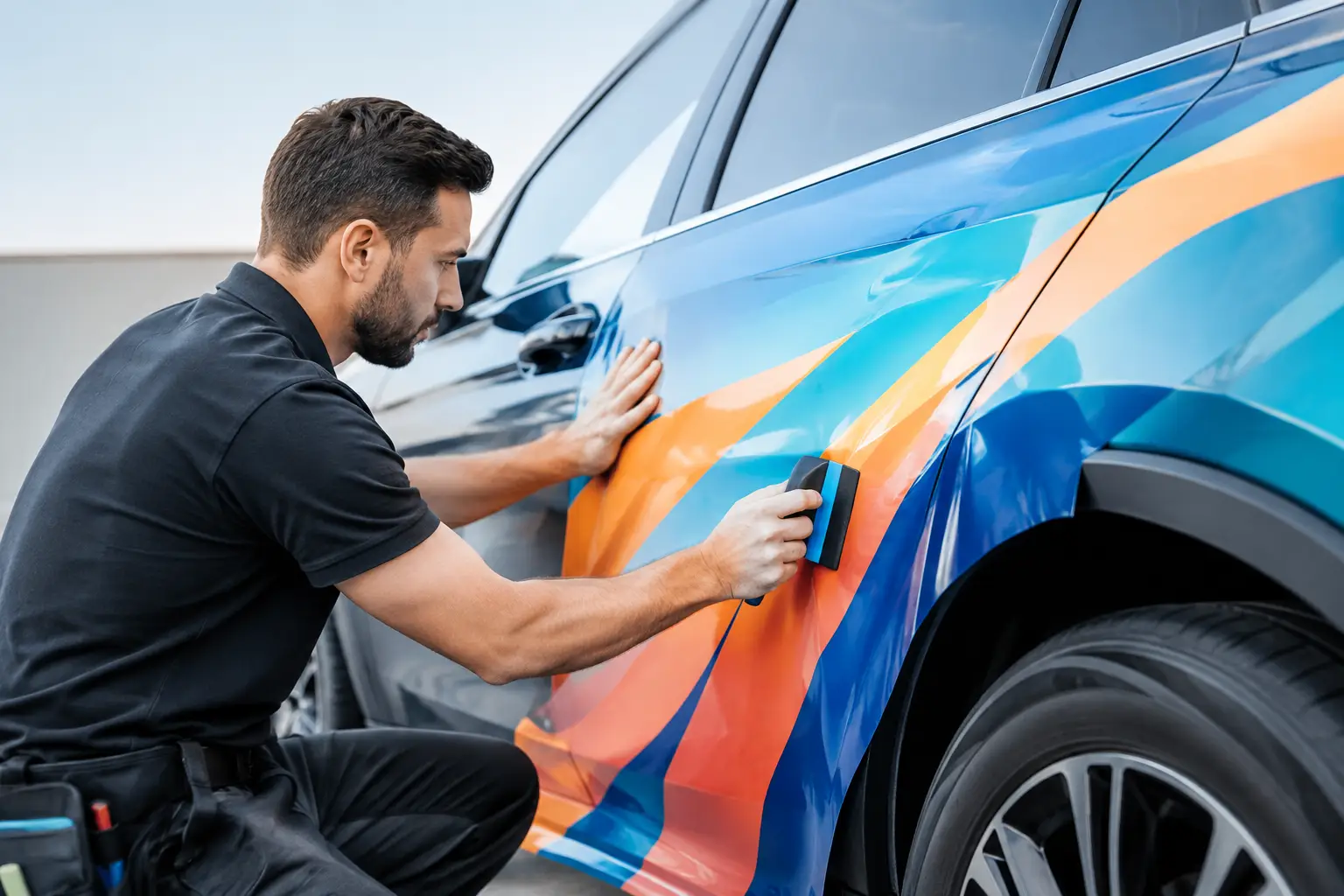
A service van parked outside a customer’s home is often seen before anyone answers the door. If its graphics are peeling at the corners, faded by the sun, or difficult to read from the street, the vehicle sends the wrong message about the business behind it. Strong vehicle wrap quality turns a car, truck, trailer, or fleet vehicle into a clean, credible branding tool that works wherever the road takes your team.
The difference is not simply whether a vehicle has vinyl on it. It comes down to the materials selected, the way the artwork is designed, the condition of the vehicle, and the precision of the installation. For Houston businesses, heat, humidity, UV exposure, rain, and daily driving make those decisions especially important.
Vehicle Wrap Quality Starts Before Production
A polished wrap begins with a clear business goal. Some companies need a full wrap that creates a major visual impact across an entire fleet. Others need partial wraps, spot graphics, door logos, or lettering that identifies vehicles without covering every painted surface. Each approach can look professional when it is designed for the vehicle and the way customers will see it.
The strongest layouts prioritize recognition at a glance. Your company name, key service, phone number, and primary visual elements should be legible from a realistic viewing distance. A crowded design may look impressive on a computer screen but become difficult to understand when the vehicle is moving through traffic or parked across a lot.
This is where brand consistency matters. Colors, logo use, typefaces, and messaging should align with your storefront, uniforms, website, and other customer-facing materials. A fleet should look like part of an established company, not like a collection of one-off advertisements.
Design Has to Work With the Vehicle
Vehicle bodies are not flat sign panels. They have door seams, fuel doors, handles, mirrors, curves, wheel wells, bumpers, rivets, and recessed areas. A design needs to account for all of them before printing begins.
For example, placing small text across a door seam or over a deep body contour can hurt readability. Important logo elements should not disappear into a handle or wrap around a corner where customers cannot see them. A professional proof process lets the business review the graphic on a vehicle-specific template, catch placement issues, and approve the final direction before production.
Material Choices Affect Vehicle Wrap Quality
Not all vinyl is built for the same job. The right choice depends on whether the graphic is temporary, long-term, flat-surface lettering, a partial wrap, or a full wrap that must conform around complex curves. Using lower-grade material for a demanding installation may reduce the initial price, but it can create costly problems later.
High-quality cast vinyl is commonly selected for full wraps because it is designed to conform more effectively to curves and recessed areas. Calendared vinyl can be appropriate for certain short-term campaigns, flat applications, or simpler vehicle graphics, but it generally does not perform the same way on complex surfaces over time. The material should match the application rather than being selected only because it is less expensive.
Lamination is another practical part of the decision. A compatible laminate helps protect printed graphics from UV exposure, moisture, road grime, and routine washing. It can also provide the finish that best fits the brand, whether that is gloss, matte, or another approved appearance. A wrap is exposed to far more than sunlight, so the printed image needs more protection than ink alone can provide.
Color management also deserves attention. A business with recognizable brand colors should not assume every printed red, blue, or green will look identical across materials and production runs. Reviewing proofs and, when appropriate, color samples helps avoid surprises before a full fleet goes into production.
Installation Is Where Good Materials Can Fail
Excellent film and sharp printing do not guarantee a good result. Installation determines whether the graphics sit cleanly on the vehicle and remain secure through normal use.
Proper preparation is essential. The vehicle surface must be thoroughly cleaned, with wax, grease, silicone, dirt, and other contaminants removed. Areas around handles, trim, edges, and seams need special attention. Applying graphics over contamination can prevent proper adhesion, even if the surface looks clean at first glance.
Temperature and working conditions matter as well. Vinyl responds to heat, stretch, and pressure. An experienced installer knows how to apply material without over-stretching it, how to work it into contours, and how to finish edges correctly. Over-stretched film may look acceptable at installation, then pull back later. Poorly finished edges can collect moisture and debris, increasing the risk of lifting.
Complex areas require patience. Deep recesses, bumpers, mirrors, and compound curves may call for specific installation techniques, carefully planned seams, or a different graphic approach. There is a trade-off: a seamless look is appealing, but forcing one large piece of film into an extreme contour is not always the most durable choice. The best solution balances appearance with long-term performance.
What Houston Conditions Mean for Your Wrap
Houston vehicles face intense sun, high temperatures, humidity, sudden storms, and frequent road use. A wrap that is expected to hold up in this environment needs appropriate materials, professional installation, and reasonable maintenance.
Sun exposure is often the biggest concern. Over time, UV rays can affect both printed color and the vinyl itself. Parking indoors or under cover whenever possible helps preserve the appearance of the graphics. That may not be realistic for every service fleet, but even partial protection can make a difference.
Heat also puts stress on adhesive and film, especially along edges and in areas where the vinyl has been shaped around curves. This is one reason a low-cost wrap can become expensive quickly. If a vehicle needs rework after premature lifting, the business loses time, pays for corrections, and may have a branded vehicle off the road during a busy schedule.
For local operators, vehicle condition is part of the equation. Rust, failing paint, dents, cracked trim, and previous adhesive residue can affect the final result. Vinyl is not a repair method for damaged paint or corroded metal. A trusted sign partner should discuss those limitations before the project moves forward, rather than covering the issue and hoping it holds.
How to Evaluate a Vehicle Wrap Quote
A quote should give you confidence about what is being produced, not leave you guessing what was included. Price matters, but it should be considered alongside scope, film type, design support, printing, surface preparation, installation, and expected performance.
Ask whether the quote is for a full wrap, partial wrap, or cut vinyl graphics. Confirm how many vehicle sides are included and whether roof, hood, rear doors, bumpers, and windows are part of the plan. Perforated window film can be useful for rear windows, but it has visibility and durability considerations that should be reviewed for the specific vehicle.
It is also reasonable to ask about the production process and post-installation support. A professional provider should explain what the proof approval covers, what condition the vehicle should be in at drop-off, how long installation is expected to take, and what care instructions apply afterward. For fleet work, ask how the team will maintain consistency from one vehicle to the next.
Be cautious with quotes that are dramatically lower than others without a clear explanation. The savings may reflect a smaller scope, lower-grade materials, limited preparation, less design work, or less experienced installation. That does not mean every affordable option is poor, but it does mean the comparison should be specific.
Protecting the Finished Graphics
Once the vehicle is wrapped, routine care helps preserve its clean appearance. Hand washing with mild soap and water is generally the safest approach. If using a pressure washer, keep the spray at a reasonable distance and avoid directing high-pressure water at edges, seams, and corners. Harsh solvents, abrasive brushes, and automatic wash equipment can damage graphics or shorten their service life.
Address spills, bird droppings, fuel residue, and road grime promptly. These contaminants can become more difficult to remove after prolonged exposure. When a vehicle needs collision repair, paint work, or panel replacement, plan for the affected graphics to be removed and replaced rather than expecting the original wrap section to transfer perfectly.
For businesses with several vehicles, simple standards make maintenance easier. Keep an approved artwork file, record the film and finish used, and photograph completed vehicles. When a new truck joins the fleet or a panel needs replacement, those records help keep the visual identity consistent.
A vehicle graphic should make your company look ready for the work ahead. A to Z Sign Company helps Houston businesses plan vehicle graphics around visibility, durability, and a clean final presentation. Before approving a wrap, look beyond the first-day appearance and choose a solution built to represent your business mile after mile.
Leave a Reply