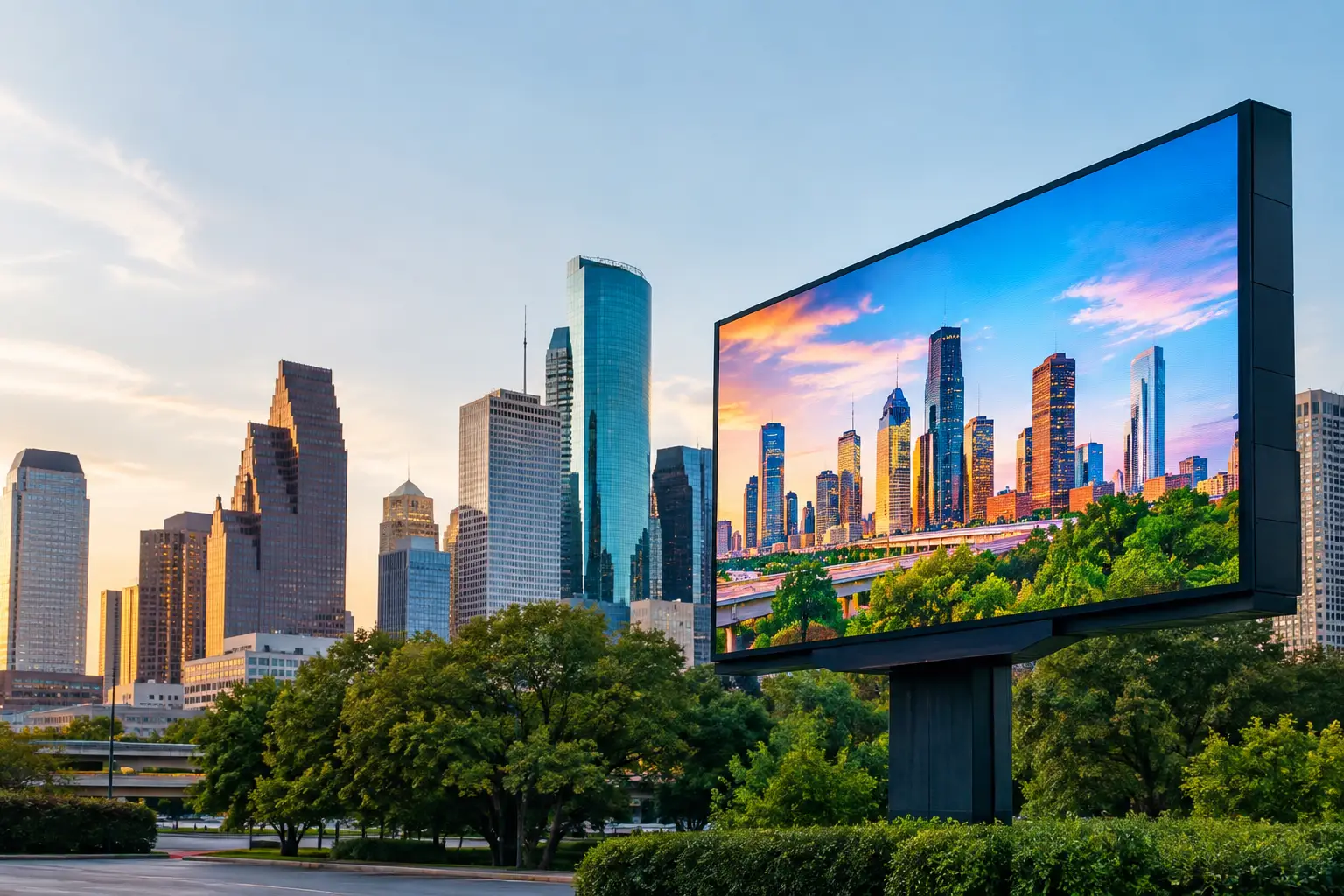
A storefront sign has one job: make your business easy to notice, recognize, and choose. LED displays add a second job: keeping that message current. For Houston businesses with changing offers, events, hours, menus, or tenant information, that flexibility can turn a sign from a fixed identifier into an active sales tool.
The right display does more than flash bright colors. It supports clear communication at the speed your business operates. A restaurant can promote lunch specials before noon and dinner features later in the day. A medical office can share arrival instructions. A retail center can direct visitors to open suites, seasonal events, or parking areas. The result should feel professional and useful, not distracting.
Where LED Displays Deliver the Most Value
LED displays are not the right answer for every sign project. A permanent monument sign with dimensional letters may be the better fit for a law office, luxury retail space, or professional campus that needs a refined, consistent presence. But when your message changes regularly, an electronic display can provide value that a static panel cannot.
This is especially true for businesses that rely on timely customer action. Restaurants, churches, schools, event venues, retail centers, auto service shops, fitness facilities, and medical offices often have information that is relevant for days, hours, or even minutes. Replacing printed banners or manually changing letter boards takes time and can leave the property looking temporary. A properly planned LED message center gives staff a controlled way to update the public-facing message.
For multi-tenant properties, the benefit is often directional. A pylon or monument sign can establish the property identity and list major tenants, while an LED display shares leasing messages, event details, wayfinding notices, or community announcements. That combination gives the site a permanent visual anchor without giving up flexibility.
Houston’s large roadways and busy commercial corridors also make viewing distance a practical design issue. A display facing fast-moving traffic needs a different approach than one positioned near a pedestrian entrance. Size, pixel pitch, brightness, placement, and message length all affect whether drivers can understand the sign in the few seconds available.
Choosing LED Displays for the Actual Viewing Conditions
An LED sign should be specified for its location, not selected from a generic product list. The most expensive display is not automatically the best display, and a display that looks sharp at close range may be unnecessary for a roadside installation.
Viewing distance determines pixel pitch
Pixel pitch refers to the distance between LED pixels. A tighter pixel pitch creates a more detailed image up close. That is useful for indoor displays, menu boards, lobby messaging, and signs viewed by pedestrians. For a display mounted along a major roadway, viewers are farther away, so a larger pixel pitch may provide clear messaging at a more efficient cost.
The goal is readability, not screen-like detail. If a driver cannot read the headline while passing the property, extra visual detail will not solve the problem.
Brightness must work in Texas sun
Houston sunlight can be intense, and an outdoor LED display needs enough brightness to remain legible during the day. It also needs appropriate controls so it does not become harsh after dark. Automatic brightness adjustment helps the display respond to ambient light conditions and supports a more polished appearance for customers, neighbors, and nearby drivers.
Brightness should never be treated as the only measure of quality. A well-designed display uses contrast, simple color choices, and readable typography. Overly bright content with too much motion can be difficult to read and may create complaints rather than attention.
Cabinet design and service access matter
Outdoor equipment is exposed to heat, rain, humidity, and airborne debris. The cabinet, face protection, ventilation, internal components, and mounting system all need to suit the installation environment. A display may look clean on opening day, but long-term performance depends on the details behind the face.
Service access matters as well. When a module, power component, or communication connection requires attention, technicians need safe access without turning a routine repair into a major disruption. Planning this early protects the investment and reduces downtime later.
What to Put on an LED Display
The strongest LED messages are usually simpler than business owners expect. A display is not a brochure. It is a quick visual conversation with people who may be driving, walking in, or waiting nearby.
Start with the action you want someone to take. Visit today, try a featured service, attend an event, call for an appointment, or find a location entrance are all clear directions. Then pair that action with the essential detail: a date, time, offer, product, or location cue.
A practical message cycle generally gives each screen enough time to be read. Short phrases, large type, and high contrast perform better than dense paragraphs. Animation should support the message, not compete with it. Movement can draw attention to a promotion, but rapid transitions and scrolling text often reduce comprehension for passing traffic.
For example, a restaurant may get stronger results from “Weekday Lunch Specials 11-3” than from a long sequence listing every menu item. A medical clinic may use “Same-Day Appointments Available” followed by its phone number or a clear directional cue. A church may promote service times and a community event, rather than trying to explain its full calendar in one rotation.
Brand consistency matters here. Your display content should use the same logo treatment, colors, and tone as your building sign, window graphics, menus, printed materials, and vehicles. A message center can change often without making the brand look inconsistent.
Permitting, Placement, and Property Coordination
Before production begins, the project needs a realistic review of local sign regulations, property requirements, and utility conditions. Electronic message centers are commonly subject to rules covering size, height, placement, illumination, message changes, and operating hours. Requirements can vary by municipality, commercial district, and property type.
This is why sign planning should begin before a cabinet is ordered or a site is prepared. A display that is too large, too close to the right-of-way, improperly positioned, or not approved for the site can create costly delays. For leased locations, landlords and property managers may also have brand standards or sign criteria that affect the final design.
Electrical planning is equally important. The display needs a properly planned power source, safe connections, and a finished installation that fits the site. If the sign is part of a new development, remodeling project, or façade update, coordinating these details with the broader construction schedule helps avoid rework.
A to Z Sign Company approaches LED projects as complete commercial sign installations, from design and permitting through fabrication, installation, and ongoing service. That matters because a display is only as effective as its placement, structure, content plan, and final finish.
Budgeting Beyond the Initial Display Price
The purchase price is only one part of the decision. A realistic budget accounts for the display itself, supporting structure, electrical work, permit requirements, installation equipment, site conditions, programming, and future maintenance. The exact mix depends on whether the display is added to an existing sign, built into a new monument or pylon, or installed as part of an interior communication system.
There are also practical operating considerations. Someone on your team needs responsibility for content updates, especially if the display will promote daily or weekly information. The process should be simple enough that messages stay current, but controlled enough that every screen reflects the business professionally.
Maintenance should be treated as normal ownership, not an afterthought. Like any illuminated sign, LED displays benefit from periodic inspection, cleaning, connection checks, and prompt service when a component is not performing correctly. Addressing a dim section or failed module early helps preserve a clean, credible appearance.
Build the Sign Around the Business Goal
A successful LED display begins with a business question, not a screen size. Do you need to pull traffic into a restaurant during slower dayparts? Direct patients to the right entrance? Promote changing retail offers? Improve communication at a school, church, or commercial property? The answer shapes the sign type, location, content strategy, and budget.
When the display is designed around that goal, it becomes more than an illuminated feature on the property. It becomes a dependable part of how customers find you, understand what is happening, and decide to stop in.