A sign can look excellent on a design proof and still fail to do its job if it is undersized, poorly placed, dim at night, or installed without regard for the building. The business sign installation process turns an approved concept into a finished, customer-facing asset that is visible, secure, code-conscious, and consistent with your brand.
For a Houston storefront, medical office, restaurant, or commercial property, installation is not simply the last step. It affects when you can open, whether your landlord approves the work, how long the sign lasts in heat and storms, and how easily customers can find you from the road or parking lot. A professional process prevents last-minute surprises and delivers a cleaner final result.
The Business Sign Installation Process Begins at the Site
Before a sign is fabricated, the installation team needs to understand the actual location. Measurements from a leasing brochure or an old building plan are useful, but they do not replace a site survey. Walls may have soffits, uneven surfaces, existing electrical connections, drainage lines, architectural features, or access limitations that change the scope of work.
During a site review, the key questions are practical: Where will customers see the sign first? Is there enough wall area for channel letters? Can a lift or crane reach the installation point? Is electrical power available for illuminated signage? What materials are behind the façade? These details determine mounting methods, hardware, wiring routes, and labor requirements.
Visibility is also assessed from the customer’s point of view. A monument sign near a driveway has different needs than a set of dimensional letters inside a lobby. A pylon sign serving a retail center must be legible at speed and positioned within the property’s approved sign area. The best sign for your location depends on traffic patterns, viewing distance, building height, nearby obstructions, and local rules.
Property Approval Comes Before Production
If you lease your space, your landlord or property manager may require sign criteria approval before work begins. Many office parks, shopping centers, and mixed-use developments specify letter style, colors, placement, illumination type, and maximum sign size. Some require a formal submittal showing scaled elevations and materials.
This step can feel administrative, but it protects everyone involved. Producing a sign before confirming property criteria can lead to expensive revisions or delays. For multi-tenant properties, it also helps preserve a polished, consistent appearance across the center.
Design and Engineering Turn a Concept Into a Buildable Sign
Once the location is documented, the design is adjusted for real-world installation. This is where a concept becomes a production-ready sign package. The artwork must account for actual dimensions, mounting surfaces, viewing angles, illumination, and brand standards.
For example, illuminated channel letters require more than a logo file. The production plan defines letter depth, face color, return color, LED layout, wiring, raceway or direct-mount method, and electrical requirements. A freestanding monument sign may require a structural foundation, internal frame, tenant panels, and drainage considerations. Each decision affects appearance, durability, serviceability, and cost.
There are trade-offs. Direct-mounted letters can create a cleaner look, but they require individual wall penetrations and may take more installation time. A raceway can reduce penetrations and simplify electrical connections, though it is more visible. For an exterior sign in the Houston area, material selection also matters. Heat, humidity, intense sun, and heavy rain call for finishes, fasteners, and electrical components chosen for commercial outdoor use.
Permits and Code Review Keep the Project Moving
Many permanent exterior signs require permits. Requirements vary by municipality, sign type, zoning district, and property conditions. In Houston and surrounding communities, the permit path may involve sign regulations, electrical review, engineered drawings, or property authorization.
Permit timing should be built into the schedule rather than treated as an afterthought. A sign company that handles permitting can prepare the drawings and documentation needed for the applicable jurisdiction, track the process, and coordinate adjustments if reviewers request more information.
Not every sign follows the same path. Interior ADA signs, window graphics, and temporary promotional displays may have different requirements than a new illuminated cabinet sign or ground-mounted monument. A clear review at the beginning helps determine what applies to your project.
Fabrication Is Where Quality Becomes Visible
After approvals are in place, fabrication begins. Materials are cut, formed, painted, printed, wired, assembled, and tested according to the final proof and production specifications. Good fabrication is not only about visual accuracy. It is about creating a sign that can be installed safely and continue to look professional after months of sun, weather, cleaning, and daily operation.
Illuminated signs should be tested before they leave the shop. Printed graphics should be checked for color, alignment, and finish. Dimensional letters need clean edges and consistent depth. For multi-location businesses, approved colors and logo proportions should be carried across every sign type, from exterior identification to lobby signage and fleet graphics.
The production schedule depends on the sign. Window graphics may move quickly once artwork is approved. Custom channel letters, pylon signs, and monument signs generally require more coordination because they involve specialized fabrication, structural components, electrical work, and permitting.
Installation Day Requires Planning, Not Guesswork
A clean installation starts before the crew arrives. The team confirms site access, delivery routes, lift or crane needs, parking restrictions, weather conditions, and electrical readiness. For active businesses, the installation plan should also minimize disruption to customers, employees, tenants, and neighboring businesses.
The work may take place before opening, after closing, or during a planned low-traffic period. This is especially useful for restaurants, medical facilities, retail centers, and offices that cannot block entrances or customer parking during busy hours. Larger signs may require lane management, equipment staging, or temporary safety barriers.
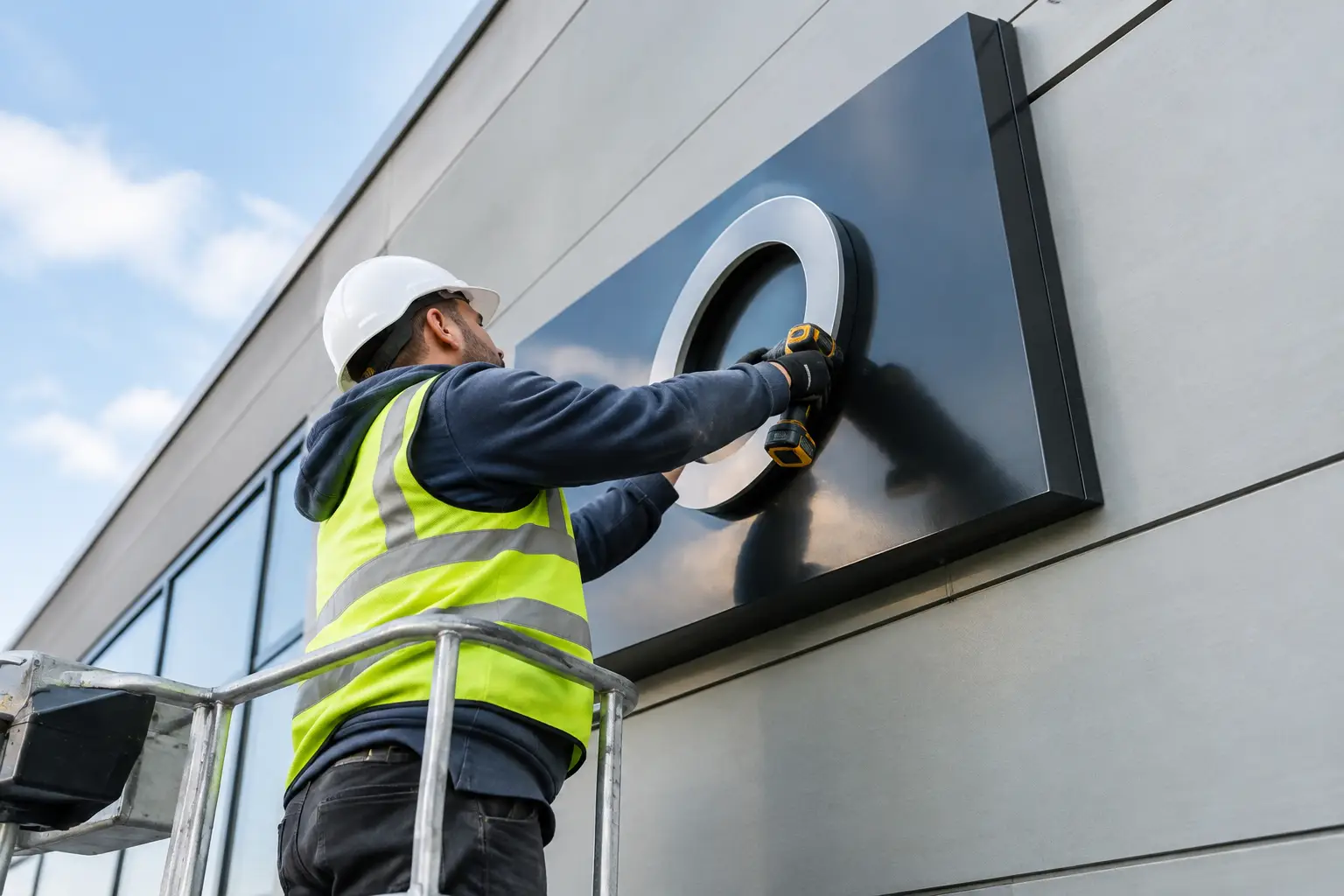
On site, installers lay out the exact placement, verify level and spacing, prepare mounting points, and secure the sign using the specified hardware. Electrical signs are connected by qualified personnel and tested for proper illumination. For wall-mounted signs, installers also seal penetrations as needed to protect the building envelope from water intrusion.
A professional crew does not leave a job looking like a construction site. Packaging, debris, old sign components, and equipment should be removed. The area around the sign should look finished because that is what customers will see.
Removing an Existing Sign May Add Scope
Replacing an outdated sign often involves more than taking down the old one. The previous sign can leave faded paint, mounting holes, exposed wiring, or damaged façade materials behind. A cabinet sign may have a larger footprint than the new channel letters replacing it, which means wall repair or repainting may be needed.
Discuss replacement conditions early. The goal is to avoid discovering after removal that the wall needs work before the new sign can be mounted. In some cases, retaining an existing structure and updating faces or panels is the practical choice. In others, a full replacement creates a much stronger brand presence.
Final Testing and Walk-Through Protect the Investment
Before the project is closed out, the sign should be inspected from close range and from the normal customer viewing distance. Installers check alignment, secure mounting, lighting, graphics, finish quality, and cleanup. For illuminated signage, nighttime visibility matters too. A sign that looks balanced in daylight may reveal uneven lighting or glare after dark.
This is also the time to confirm any service details, such as access to electrical components, timer settings, or recommended maintenance. LED signs are efficient, but they still benefit from periodic inspections. Keeping faces clean, checking illumination, and addressing small issues early helps protect your investment and your business image.
What Can Delay a Sign Installation?
Most delays are preventable, but commercial signage involves variables. Permit review times can change. Property managers may request design revisions. Weather can postpone exterior work involving lifts, cranes, adhesives, or electrical connections. Hidden conditions behind an existing sign or wall can also add work.
The best way to keep the schedule on track is to make decisions early, provide accurate logo files, confirm landlord requirements, and approve proofs promptly. If your opening date is fixed, share it at the first conversation. That allows the sign team to recommend a realistic sequence, including temporary signage if a permanent exterior sign will not be ready in time.
For businesses that need to look established from day one, the right installation partner brings design, permitting, fabrication, and field execution into one coordinated plan. A to Z Sign Company helps Houston-area businesses move from approved artwork to professional signage that is built for visibility, installed with care, and ready to represent the business every day.
Leave a Reply