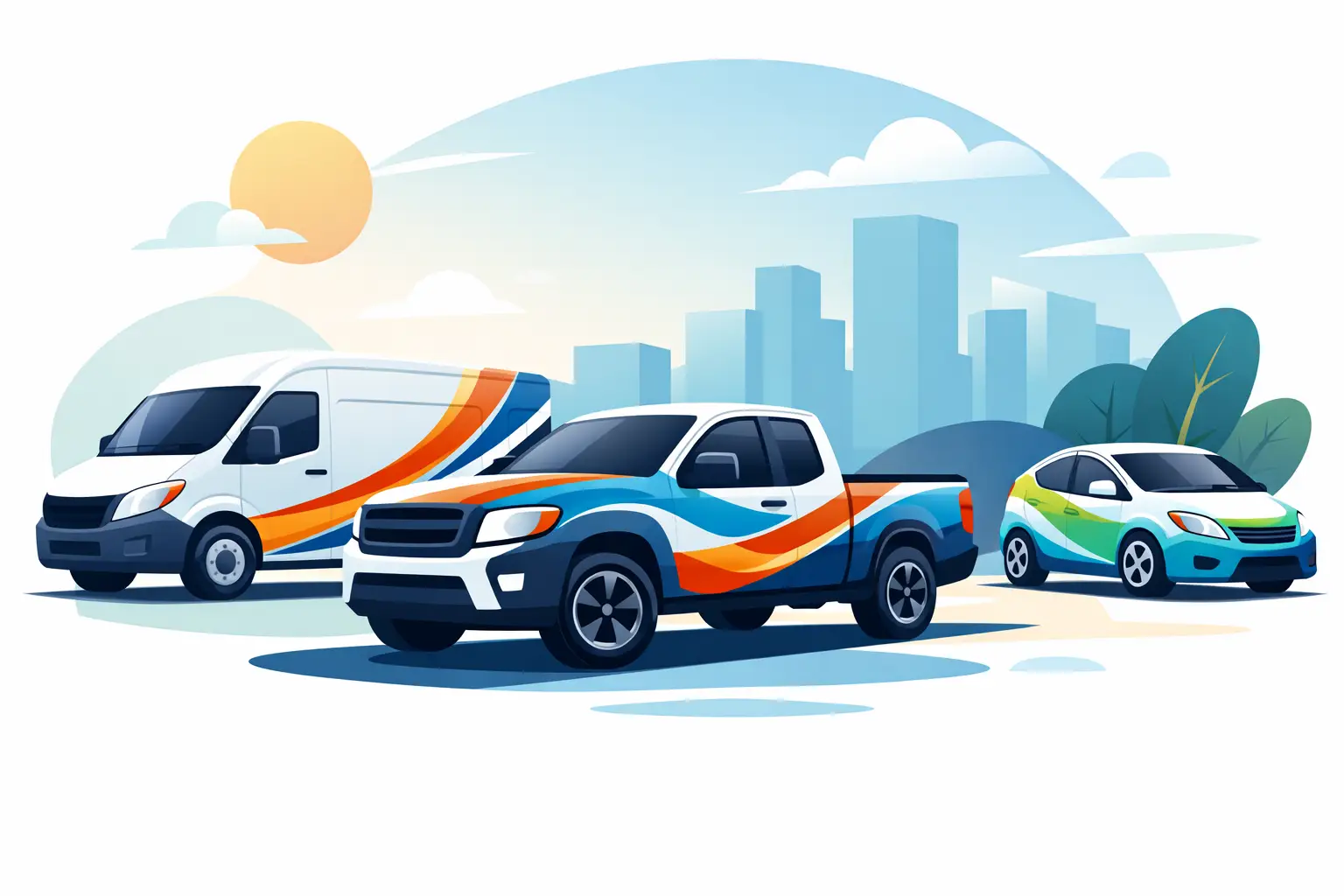
A service van parked at a job site, a pickup at a supply house, or a delivery vehicle in traffic can introduce your company to hundreds of local customers before lunch. Vehicle graphics for small business turn those routine miles into a consistent, professional advertising presence. The difference is not simply putting a logo on a door. It is creating a clean, readable design that makes people remember who you are and how to reach you.
For Houston-area businesses that rely on field teams, deliveries, estimates, and customer visits, branded vehicles can support the same goal as a storefront sign: make the business easy to recognize, easy to trust, and easy to contact.
Why Vehicle Graphics Work for Local Businesses
Most advertising disappears when a campaign ends. Vehicle graphics stay visible wherever your team works, travels, parks, and serves customers. A plumber headed to a residential call, a restaurant catering vehicle downtown, or a property maintenance truck moving between commercial sites all carry a message through the neighborhoods they serve.
That exposure matters because local customers often choose businesses that feel established. A plain vehicle may get the job done, but a professionally branded one signals organization and accountability before an employee even steps out. For service companies, that first impression can be especially valuable at a customer’s home, office, or job site.
Vehicle graphics also create brand consistency. When the same logo, colors, and messaging appear on your building sign, window graphics, uniforms, and fleet vehicles, customers have more chances to recognize your business. The design does not have to be complicated to be effective. It has to be clear.
Choose the Right Level of Vehicle Graphics for Your Business
The best option depends on your budget, the vehicle type, how long you plan to keep it, and how much visibility you need. A full wrap can create major impact, but it is not automatically the right choice for every company.
Lettering and logo graphics
Vinyl lettering and logo graphics are a practical starting point for many small businesses. This approach usually places your logo, phone number, website, and core service information on the doors, tailgate, rear window, or side panels. It works well for sedans, pickups, vans, trailers, and work trucks.
This option is often a strong fit when you need to brand several vehicles while keeping the investment controlled. It can still look sharp, provided the layout uses adequate size, contrast, and spacing. Small text may look fine in a proof but become unreadable from the next lane of traffic.
Partial wraps
A partial wrap covers selected sections of the vehicle, often using large color fields, branded patterns, product imagery, or bold service messaging. It creates more visual presence than basic lettering without covering every painted surface.
Partial wraps are useful for businesses that want a high-impact look on vans, box trucks, or larger pickups. They also offer more room to establish a recognizable visual style. The trade-off is that the uncovered paint color needs to work with the design rather than fight it.
Full vehicle wraps
A full wrap transforms the entire vehicle into a branded asset. It can be an excellent option for companies with frequent road exposure, high-value service calls, or multiple vehicles that need a consistent fleet appearance. It is particularly effective on cargo vans, shuttle vehicles, food trucks, and box trucks with large, uninterrupted panels.
A full wrap requires disciplined design and professional installation. More coverage means more opportunities for a poor layout, misaligned seams, or graphics that compete with door handles, body lines, and windows. The right production team plans around those details before installation begins.
What Every Vehicle Graphic Design Should Include
People usually have only a few seconds to see a moving vehicle. That means the most important information must be understood quickly. Start with your company name or logo, a concise description of what you do, and a reliable way to contact you.
For many local service businesses, a phone number and website are more useful than a long list of services. A roofing contractor might use “Roof Repair & Replacement,” while an HVAC company may use “Heating • Cooling • Indoor Air Quality.” Those short descriptions help viewers understand the business without making the vehicle look crowded.
Color contrast deserves just as much attention. Dark lettering on a dark vehicle, or light colors over a busy photo background, can disappear at a distance. Bold contrast, readable type, and open space generally perform better than a design packed with claims, badges, and tiny details.
Do not forget the rear of the vehicle. Drivers behind your truck at a stoplight have more time to read your message than people passing the side at highway speed. Rear-door graphics are often one of the most valuable placements for a phone number, website, or simple call to action.
Vehicle Graphics for Small Business Need to Handle Houston Conditions
Houston heat, sun exposure, heavy rain, humidity, and daily road debris can be tough on vehicle graphics. Material quality and installation practices directly affect whether graphics keep their color and adhesion or start lifting at edges and seams.
Quality cast vinyl and compatible protective laminate are typically the better choice for long-term wraps and exterior graphics. They are designed to conform to vehicle contours and stand up better over time than lower-grade films intended for short-term or flat-surface applications. The right material selection depends on the expected life of the graphics and the amount of coverage, but short-term savings can become expensive if the finish fails early.
Proper surface preparation is equally important. Vehicles need to be thoroughly cleaned, dried, and inspected before graphics are installed. Wax, road film, silicone products, and residue around trim can interfere with adhesion. A clean installation environment and experienced installers help prevent avoidable issues around rivets, curves, door edges, and recessed panels.
Plan the Project Before Production Starts
A professional vehicle graphics project should begin with accurate vehicle details. The year, make, model, body style, and any aftermarket equipment all affect the layout. A cargo van with ladder racks or a pickup with toolboxes needs a design that works around the equipment rather than hiding the brand behind it.
The proof stage is where practical decisions get made. Review the design at realistic scale, not only as an attractive image on a screen. Ask whether the company name is visible from a distance, whether the phone number can be read while the vehicle is moving, and whether the service description makes sense to someone unfamiliar with your business.
If you operate more than one vehicle, establish a repeatable layout. The vehicles do not need to be identical, especially when you have different van and truck models, but they should clearly belong to the same company. Consistent placement, colors, typography, and message hierarchy make future additions simpler and keep the fleet looking organized.
Avoid the Most Common Mistakes
The first mistake is trying to say everything. A vehicle is not a brochure. Customers should be able to identify your business and your main offer quickly, then find the contact information when they need it.
The second is choosing graphics based only on the lowest upfront price. Thin films, rushed installation, and generic layouts can weaken the result. Vehicle graphics represent your business in public every day, so poor edges, faded colors, or hard-to-read information are highly visible problems.
The third is overlooking maintenance. Hand washing with mild soap is generally safer for graphics than abrasive brushes or harsh chemicals. Pressure washing can be appropriate when done carefully, but avoid directing high-pressure water at edges, seams, and damaged areas. If a graphic begins to lift or gets damaged, address it early before moisture and debris create a larger issue.
Make Every Trip Look More Professional
The strongest vehicle graphics do more than display a logo. They help your company arrive looking prepared, reinforce the same identity customers see at your location, and keep your name visible between appointments. Whether you need clean door lettering for one truck or coordinated wraps for a growing fleet, the design should fit the way your business actually operates.
Clear Branding Starts Here: choose graphics that can be read quickly, built for the conditions your vehicles face, and installed with the same attention you expect from your own team. When the vehicle pulls into the next job, it should already be working for your reputation.