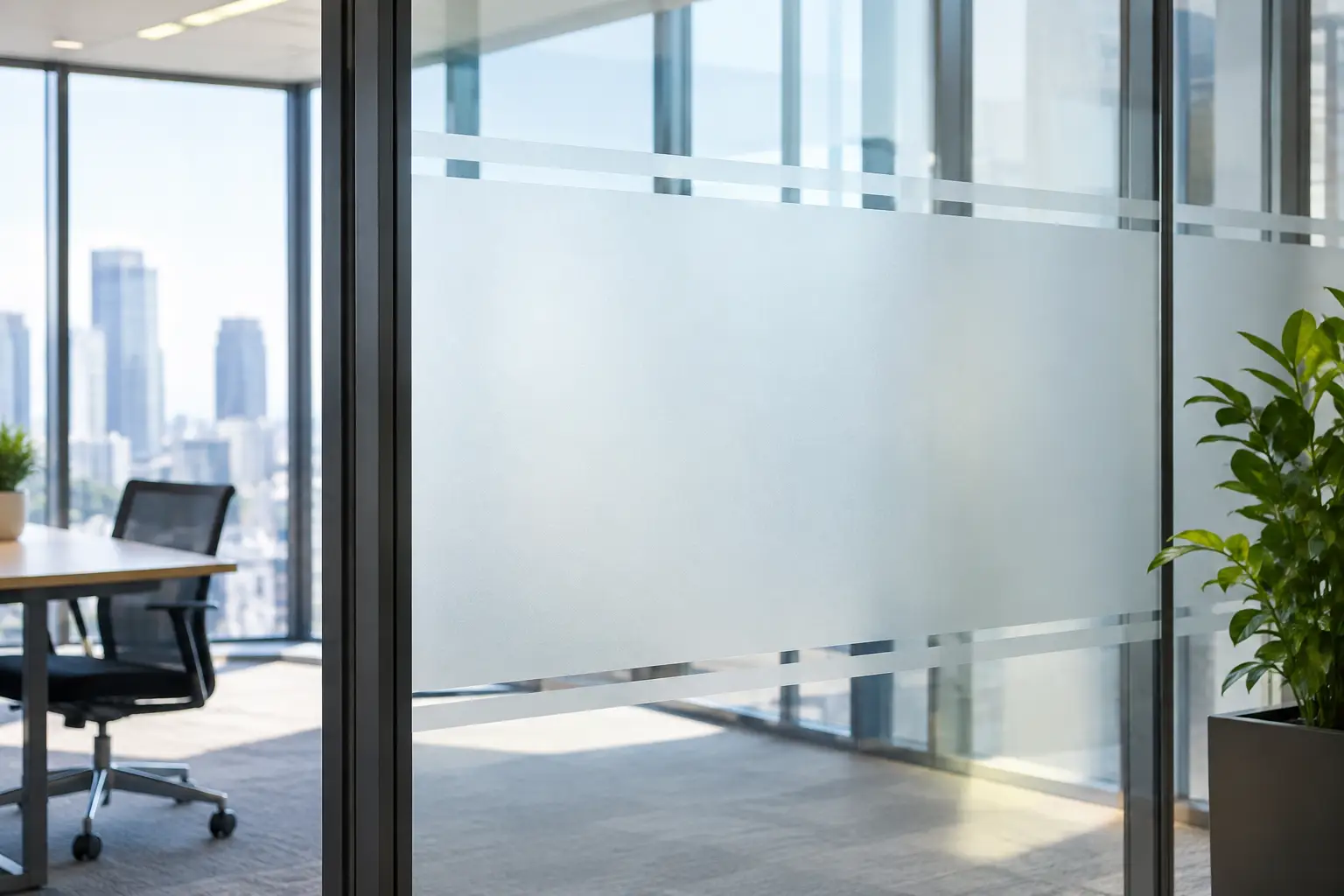
Glass offices can look sharp on a floor plan and feel exposed once people start working in them. Privacy graphics for office windows give workplaces a practical way to control sightlines without blocking light, closing off the space, or settling for a temporary fix. Applied correctly, they make conference rooms more usable, protect sensitive conversations, and bring a consistent brand presence to interior glass.
For Houston offices, medical facilities, professional service firms, and multi-tenant commercial properties, window graphics are often one of the fastest visual upgrades available. The right design considers who needs privacy, where visitors move through the building, how the space is lit, and how the finished glass should represent the business.
What Office Window Privacy Graphics Can Do
Privacy film is not a one-size-fits-all product. A full frosted treatment creates the greatest visual separation, while a patterned film can obscure views at eye level and keep the office feeling open. Printed graphics can combine both functions by placing a logo, brand colors, or custom artwork over privacy film.
The most common applications are conference room walls, executive offices, interior sidelights, reception areas, training rooms, clinic spaces, and glass partitions between work areas. In each case, the goal is not necessarily to hide the entire room. It is to create appropriate separation where people sit, meet, review information, or need to focus.
A conference room facing a busy hallway may only need a frosted band across the middle of the glass. A human resources office, financial office, or treatment room may need more complete coverage. The difference matters. Over-covering the glass can make a modern office feel boxed in, while under-covering it leaves employees and visitors with the same privacy problem.
Choose the Right Level of Privacy
The best starting point is to stand in the space and identify the actual sightlines. Look at the room from the hallway, reception desk, neighboring offices, and exterior-facing windows. Consider seated and standing views. A design that blocks a view at standing height may still leave a seated meeting table fully visible.
Frosted film for clean, consistent coverage
Frosted vinyl is a popular choice because it looks professional, works with nearly any interior style, and allows daylight to pass through. It is especially effective for offices that want an understated finish rather than a large visual statement. Frosted film can cover the full pane, stop at a specific height, or be cut into bands, stripes, geometric patterns, or a logo shape.
It also gives property managers and tenants a clean alternative to blinds. Blinds can collect dust, require regular adjustment, and look inconsistent from one office to another. Frosted film stays in place and maintains a uniform appearance.
Patterned graphics for privacy without heaviness
For spaces that need partial visual screening, etched patterns and repeating designs are often the better fit. Horizontal bands, dot gradients, or custom geometric layouts break up direct views while retaining a sense of openness. This approach works well on conference rooms, collaborative work areas, and interior offices where natural light is a priority.
Patterned privacy graphics require careful design. A pattern may look balanced on one pane but become distracting when repeated across several glass walls. Scale, spacing, and alignment should be planned around the actual window dimensions, not selected from a generic sample alone.
Branded graphics for a more established office
Interior glass is valuable branding space. A company logo at a reception entrance, a subtle brand-color pattern on conference room glass, or department names on office doors can make a workplace feel finished and easier to navigate.
Branding should support privacy, not compete with it. Large, dark graphics can make a room feel closed off. Fine details can disappear from a distance. The strongest designs use the logo and colors with restraint, leaving enough open space for the glass to still do its job. For businesses with multiple locations, using the same approved layout across offices also helps maintain a consistent customer and employee experience.
Design for the Way the Office Actually Operates
Office privacy graphics work best when the design follows daily use. A medical practice may need patient privacy near check-in and treatment areas. A law firm may want conference room screening for client meetings. A corporate office may need privacy bands that reduce distractions along a busy corridor while preserving visibility for safety and wayfinding.
Door hardware, window frames, existing wall finishes, and adjacent signs should all factor into the layout. A privacy band that runs directly through a door handle looks like an afterthought. A logo placed too low can disappear behind desks or chairs. Small details in the proof stage prevent visible problems after installation.
There is also a safety consideration. Glass partitions can be difficult to see, especially in bright offices or areas with polished floors. A properly placed visual marker helps people recognize the glass boundary while serving the broader privacy and branding plan.
Material and Installation Matter in Houston Offices
Commercial window graphics need to hold up to routine cleaning, sunlight, fingerprints, and daily contact around doors and high-traffic areas. The material choice should match the location. Interior frosted vinyl is different from a graphic intended for exterior glass that receives direct sun and weather exposure.
Houston heat and strong sunlight can be a factor for windows near building exteriors. While privacy graphics are not a replacement for dedicated solar-control film, the amount of sun exposure should still be discussed before production. A qualified sign team can recommend the right film, adhesive, print method, and finish for the surface and expected use.
Installation is equally important. Commercial glass should be measured precisely, cleaned correctly, and prepared before the graphic is applied. Misaligned stripes, trapped debris, wrinkles, or uneven edges are noticeable immediately on glass. Professional installation produces crisp lines, consistent placement across multiple rooms, and a cleaner final appearance.
Plan the Project Before the Office Is Busy
The smoothest projects begin with a clear walk-through and an approved proof. Before production, confirm which panes are receiving graphics, where coverage begins and ends, what rooms require the highest privacy, and whether building management has installation rules. In leased space, it is also smart to understand removal requirements before selecting a material.
For renovations, coordinate window graphics with paint, furniture, wall graphics, and interior signage. Installing privacy film before nearby construction is complete can expose it to unnecessary dust and damage. On the other hand, waiting until the last minute can delay an opening if conference rooms, offices, or reception areas are not ready for use.
A practical workflow includes site measurements, design review, production, scheduling, and professional installation. This helps decision-makers avoid a common issue: approving a design based on a digital mockup without considering the real glass size, mullions, doors, and viewing angles in the building.
When Privacy Film Is Not Enough
Privacy graphics are an effective visual solution, but they do have limits. Frosted vinyl obscures views. It does not provide sound control. If confidential conversations can be heard through a glass wall, acoustic improvements may also be needed.
Likewise, a partial privacy band will not conceal a room when someone stands close to the glass or looks around the edges. For highly sensitive environments, more complete coverage, window treatments, or changes to the room layout may be appropriate. The right answer depends on the type of information handled in the space and the level of discretion expected by employees and clients.
Privacy graphics also should not interfere with required visibility, safety markings, or building rules. A site-specific review keeps the finished installation attractive and functional.
A polished office does not need to choose between open light and professional privacy. With the right coverage, material, and layout, glass becomes a working part of the environment instead of a daily distraction. A to Z Sign Company can help turn that glass into a clean, branded finish built for the way your business operates.