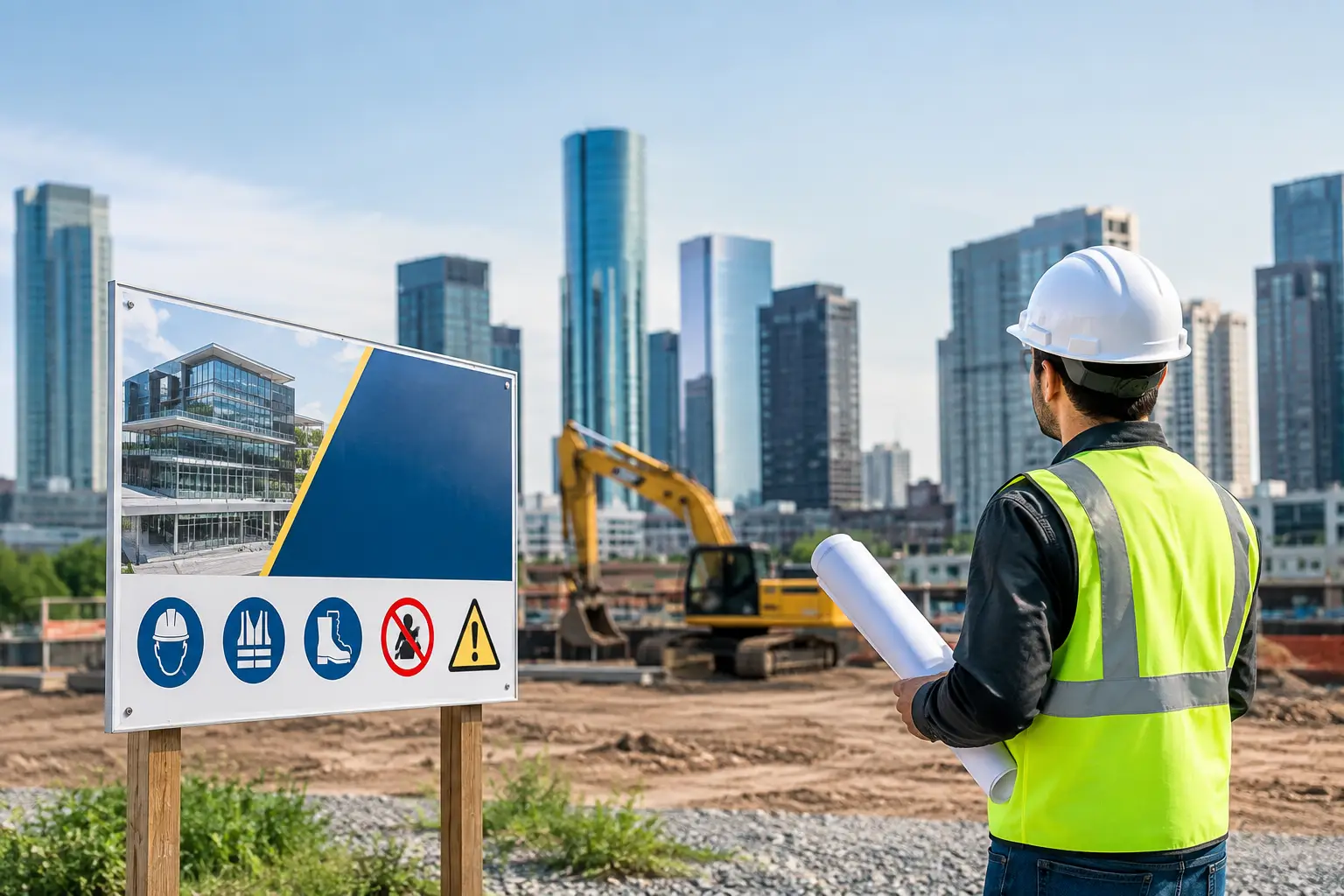
A construction site can be active for months before the finished building gives anyone a reason to stop and look. During that time, the signs on the fence, trailer, entrance, and work zones do a great deal of the work. They identify the project, direct deliveries, set safety expectations, support required notices, and show neighbors that the site is being managed professionally.
For Houston construction signage, a quick vinyl banner is not always enough. A busy commercial project may need a coordinated system that holds up through heat, rain, wind, dust, changing site conditions, and a steady flow of subcontractors. The best approach considers what people need to know, where they need to see it, and how long each sign must perform.
Start With the Jobsite Experience
Every person arriving at a project sees the site differently. A delivery driver needs a clear entrance and unloading direction. A subcontractor needs to know where to check in, park, and find current safety information. Inspectors and visitors need an obvious point of contact. Nearby customers or residents may simply need reassurance that a construction operation is organized and accountable.
That is why construction signage should be planned as a jobsite communication system, not ordered as unrelated pieces. Before selecting materials or sizes, identify the paths people take from the street to the site. Look for points where someone could make a wrong turn, block an access route, enter an unsafe area, or waste time searching for the trailer.
On a tight urban site in Downtown Houston, Midtown, or the Texas Medical Center area, a clear entry sign and delivery instruction panel can prevent congestion before it begins. On a larger industrial or commercial development, the challenge may be visibility from a frontage road, separate gates for vendors and crews, or wayfinding across a broad property. The sign package should fit the site, not a generic checklist.
The Core Signs Most Projects Need
The exact mix depends on project type, site layout, owner requirements, and applicable rules. Still, most commercial construction projects benefit from several essential categories of signage.
Project Identification and Site Branding
A project sign establishes who is building, developing, designing, or leasing the property. It can include the project name, contractor and owner identities, partner logos, contact information, and a rendering of the completed development. It is often the most visible sign on the site, especially when it faces a major road or a high-traffic retail corridor.
For this sign to work, it needs more than a large logo. Drivers need enough contrast, readable type, and a practical viewing distance. A sign facing passing traffic may require larger lettering and a simplified message, while a pedestrian-facing panel can carry more project detail. If several project partners must appear, a clear hierarchy keeps the board professional rather than crowded.
Safety, Access, and Compliance Signs
Safety signs are not decoration. They help establish controlled entry, communicate required protective equipment, identify restricted areas, and direct people toward site offices, emergency information, and exits. Common messages include authorized personnel only, hard hat requirements, no trespassing, check-in procedures, and designated delivery routes.
Requirements can vary by project, client, municipality, and jobsite safety plan. Some signs need specific wording, symbols, placement, or visibility. A sign company can produce professional, durable displays, but the general contractor, safety manager, or project owner should confirm the current requirements and approved language before production. That early coordination avoids replacing signs after installation.
Directional and Wayfinding Signs
A crew should not have to guess which gate is active or where to park. Directional signage reduces interruptions to the superintendent and keeps vehicles away from pedestrian areas and operating equipment. Temporary arrow signs, parking markers, trailer identification, gate labels, and delivery instructions are simple tools with a measurable operational benefit.
Wayfinding becomes especially valuable as a project changes. A gate that was correct during demolition may become the wrong entrance once site work, framing, or interior buildout begins. Modular panels, replaceable inserts, and temporary sign hardware make updates easier without rebuilding the entire sign program.
Fence Banners, Mesh, and Site Screening
Construction fencing creates a large visual surface. Branded banners can turn it into an organized project perimeter while helping limit views into active work areas. Printed fence mesh can also reduce wind while maintaining airflow, though material choice, attachment method, and site exposure matter.
There is a trade-off. Full-color fence graphics create a strong presentation, but they may not be the right investment for a short-duration job or a perimeter that will move repeatedly. For longer projects with public exposure, they can help protect the image of the contractor, developer, and future tenant. For a fast interior renovation, simple durable panels may be the smarter choice.
What Houston Conditions Demand From Construction Signs
Houston weather is hard on temporary signage. Intense sun can fade low-quality prints. Humidity and rain can affect poorly finished edges. Wind can stress banners, fasteners, fence panels, and freestanding signs. Construction dust and mud make lightly printed or low-contrast messages harder to read.
Material selection should match the sign’s expected lifespan and exposure. Corrugated plastic can be effective for short-term notices and directional signs. Aluminum composite panels offer a more rigid, durable option for project boards and long-term site identification. Vinyl banners work well for temporary branding and messaging when they are properly hemmed, reinforced, and installed. Reflective materials may be appropriate where signs must be read in low light, but only when that visibility serves the site plan.
Installation matters as much as the printed face. A large sign that is underbuilt for wind exposure can become a maintenance problem. Conversely, overbuilding every temporary sign can use budget that would be better spent on visibility, updates, or additional wayfinding. An experienced sign partner evaluates the mounting surface, sign size, location, exposure, and expected duration before recommending a solution.
Design for Speed of Recognition
A sign can contain the correct information and still fail because nobody can absorb it quickly. Construction environments are noisy, active, and full of competing visual information. Strong sign design reduces the decision to a few seconds.
Use high contrast between text and background. Keep primary messages short. Reserve the largest type for the action people need to take, such as “Deliveries,” “Check In,” or “Authorized Entry Only.” Place secondary details below the main instruction. When a sign must include multiple logos or a long list of contacts, make sure that content does not overpower the information needed by someone at the gate.
Consistency also matters. When directional signs use the same colors, arrows, fonts, and naming conventions, people learn the system faster. This is particularly useful on multi-phase developments, medical projects, schools, and large commercial properties where crews, vendors, and visitors change frequently.
Plan Production and Installation Before the Rush
Construction timelines are rarely static. A permit date moves, a tenant buildout accelerates, a grand opening is scheduled, or site access changes with little notice. Signage should be identified early enough to allow for design approval, production, permit review when applicable, and professional installation.
Start with the signs needed before mobilization, then separate the package into phases. The first phase might include project identification, gate signs, safety notices, and trailer graphics. Later phases can add leasing signage, branded fence graphics, interior wayfinding, storefront signs, and opening-day displays. This approach keeps the site functional now without forcing every future decision upfront.
A proof process is essential. It gives the project team a chance to verify names, logos, phone numbers, approved safety language, color use, dimensions, and placement before materials are produced. It is much less expensive to correct an incorrect suite number or partner logo in a proof than after a panel is installed on a fence or monument structure.
Work With a Sign Partner That Understands the Full Scope
Construction signage often overlaps with the signage that follows completion. A developer may need jobsite identification now, then monument signs, channel letters, window graphics, ADA signs, directional signs, and wall graphics for the finished property. Coordinating the visual standards early can make the transition from construction site to occupied building look more intentional.
A to Z Sign Company helps Houston-area commercial clients manage that progression with custom design, production, permitting support, installation, repair, and maintenance. The goal is not to add signs for their own sake. It is to create visible, durable communication that supports the project team and presents the property professionally at every stage.
The right construction sign package keeps people moving in the right direction, protects the project’s public image, and gives the finished development a stronger start before the doors ever open.