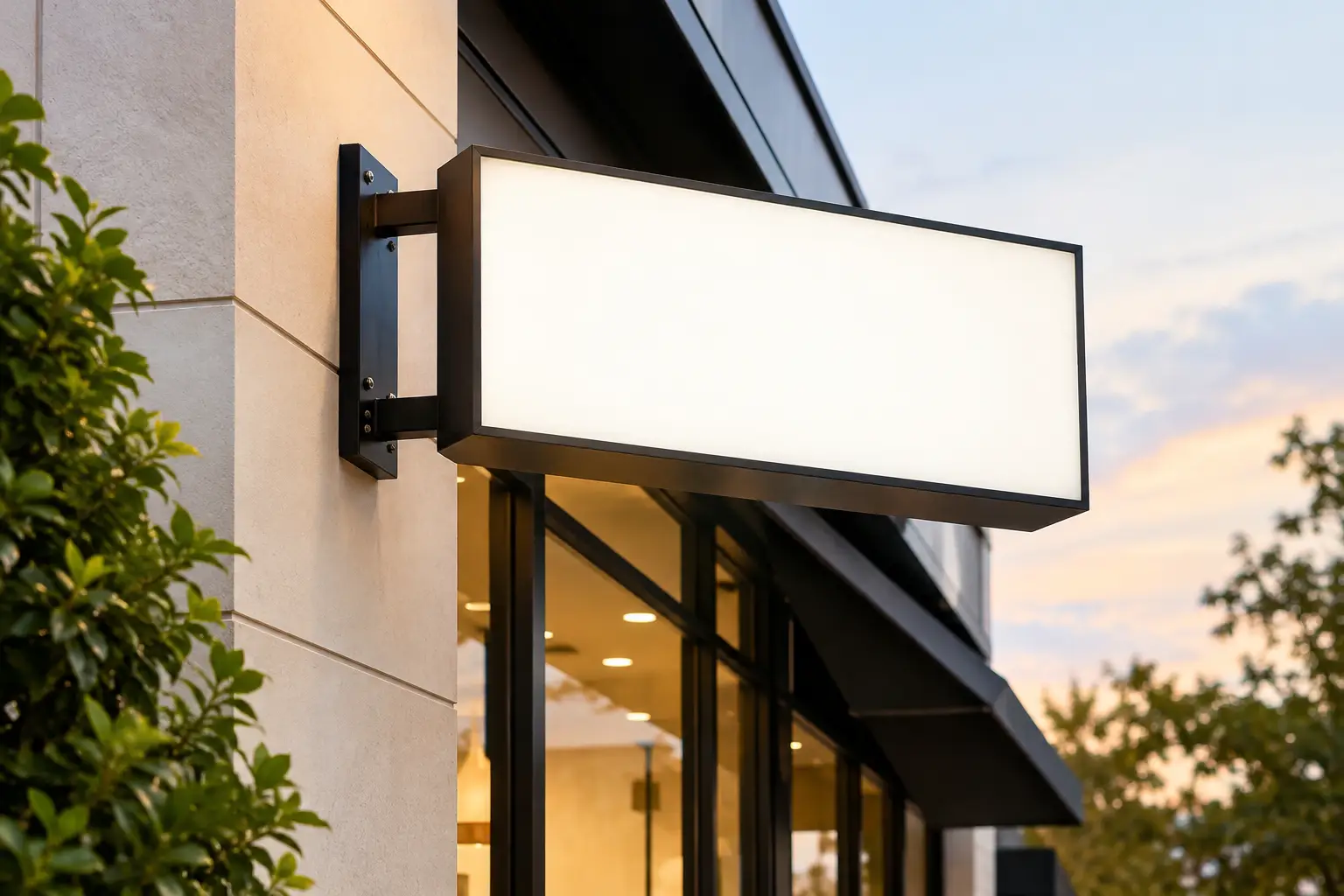
A storefront can have the right location, a clean facade, and a strong service offer, yet still lose traffic if customers cannot identify it from the road. Cabinet signs solve that visibility problem with a durable, illuminated format that works day and night. For businesses that need a professional presence without overcomplicating the exterior, they remain one of the most practical sign choices available.
A cabinet sign is not simply a lit box with a name on it. Its effectiveness comes down to scale, letter style, color contrast, illumination, mounting method, and the viewing conditions around your property. Get those details right, and your sign does more than display your logo. It helps customers find you, reinforces credibility, and keeps your business recognizable after dark.
What Are Cabinet Signs?
Cabinet signs are enclosed sign structures, typically fabricated from aluminum, with an acrylic or polycarbonate face and internal LED lighting. The face can display your logo, business name, hours, services, or a combination of branded information. They may be mounted directly to a building wall, installed on a pole or pylon, attached to a monument structure, or used as part of a multi-tenant sign system.
The cabinet protects the lighting and electrical components while creating a clean, consistent display surface. That makes it a strong option for retail storefronts, restaurants, service businesses, office parks, medical facilities, industrial properties, and shopping centers.
The format is especially useful when visibility must carry beyond business hours. A non-illuminated sign can look sharp during the day but disappear into a dark parking lot at night. An internally illuminated cabinet remains legible when customers are arriving for dinner, leaving work, looking for an appointment, or trying to find a business from a busy roadway.
Where Cabinet Signs Perform Best
Cabinet signs work well in many commercial settings, but the right application depends on how customers approach your location. A sign facing a high-speed roadway needs larger copy, stronger contrast, and less information than a sign viewed from a pedestrian walkway. The goal is not to fit every detail onto the face. The goal is to make the most important identifier clear at the distance that matters.
For a retail center, a wall-mounted cabinet can give a tenant strong frontage visibility without changing the building’s architecture. For a freestanding location, a cabinet installed on an existing pole sign can reach drivers before they pass the entrance. At an office or medical complex, cabinet panels can organize tenant names and suite directions in a format visitors can read quickly.
They are also a practical fit for businesses with changing messages. A cabinet can be designed with replaceable faces or changeable panels when offerings, tenant rosters, or promotions need to be updated. That flexibility can reduce the need to replace an entire sign structure later.
Design Cabinet Signs for Fast Recognition
The most effective sign designs are usually the simplest. A customer should be able to recognize the business name or logo in a few seconds, not study the sign like a brochure. That calls for disciplined use of space.
Start with the brand name and logo. These should have priority over secondary details such as phone numbers, taglines, or long service lists. A phone number may be useful on a sign viewed from a parking area, but it often adds clutter on a roadway-facing sign where the audience is moving too quickly to read it.
Color contrast matters as much as brand color. Dark lettering on a light face or light lettering on a dark face generally produces better readability than low-contrast combinations. A logo that looks great on a website can lose impact when backlit, so production proofs should account for illumination and viewing distance.
Typeface selection deserves the same attention. Thin scripts, compressed lettering, and overly decorative fonts may not hold up from the street. Bold, clean letterforms are easier to read and tend to look more established on a cabinet face. If your company name is long, the design may need an abbreviated mark, a stacked layout, or a larger sign area rather than smaller lettering.
Match Sign Size to Viewing Distance
Sign size is not a matter of preference alone. It should reflect traffic speed, setback from the street, building elevation, sightlines, and local code requirements. A cabinet that looks oversized in a design proof may be exactly what is needed to be legible from an access road. Conversely, a large cabinet above a narrow storefront can overwhelm the facade and compete with neighboring tenants.
Before fabrication, evaluate where customers first see the location. Consider trees, parked vehicles, utility poles, awnings, neighboring signage, and the angle of approaching traffic. These real-world conditions often determine whether a sign performs well after installation.
Choose Materials and Lighting Built for Houston
Houston signage faces intense sun, heat, humidity, heavy rain, and occasional severe weather. Material quality is not a cosmetic upgrade. It directly affects how long a sign stays clean, bright, and structurally sound.
Aluminum cabinets are commonly used because they resist corrosion and provide a dependable enclosure for internal components. Quality acrylic faces can deliver strong color and even illumination, while polycarbonate may be considered where additional impact resistance is needed. The best choice depends on the sign’s size, placement, exposure, and expected maintenance needs.
LED illumination is the standard choice for most new cabinet signs. It provides bright, energy-efficient lighting with a long service life compared with older fluorescent systems. However, not all LED layouts produce the same result. Proper module spacing and interior sign construction help prevent hot spots, shadows, and uneven brightness across the face.
A bright sign is useful, but excessive brightness can create glare or look out of place in a neighborhood-oriented setting. The lighting level should suit the property, its surroundings, and any applicable regulations. A polished sign looks intentional at night, not harsh or distracting.
Permitting and Installation Are Part of the Project
A sign can be well designed and well fabricated yet still create delays if permitting, landlord approvals, or installation requirements are handled too late. In Houston and surrounding communities, sign regulations can vary by municipality, district, property type, and sign location. Shopping centers and office properties may also have their own sign criteria covering size, colors, mounting methods, and tenant placement.
That is why the proof-to-install workflow matters. Before production, a commercial sign partner should confirm the site conditions, review the intended mounting surface, verify electrical access, and identify permitting needs. For freestanding cabinet signs, the foundation, pole condition, wind-load requirements, and utility connections may require additional planning.
Installation should also protect the building and the sign investment. Secure mounting, proper sealing, clean electrical work, and accurate leveling affect both appearance and long-term performance. A sign that is slightly crooked, poorly sealed, or installed with visible damage can weaken an otherwise professional brand presentation.
Plan for Maintenance Before You Need It
Even durable cabinet signs need occasional attention. Faces collect dirt and airborne residue. LEDs, power supplies, wiring, and photo controls can eventually require service. A cabinet that appears dim, flickers, or has dark areas should be inspected promptly, especially if it is a primary identifier for the business.
Routine cleaning helps preserve color and brightness, while periodic inspections can catch small electrical or structural issues before they become larger repairs. If your business operates multiple locations, standardizing cabinet sign specifications can make future maintenance and replacement more efficient. Consistent colors, cabinet dimensions, illumination standards, and logo files also protect brand continuity as the company grows.
A to Z Sign Company helps Houston-area businesses coordinate cabinet sign design, production, permitting, installation, and maintenance as one connected project. That approach keeps decisions moving and helps ensure the finished sign looks right at the property, not just on paper.
The right cabinet sign gives customers one less reason to keep driving. Make the name easy to see, make the message easy to understand, and build it to keep working through the conditions your location faces every day.
Leave a Reply